
TEMPO.CO, Jakarta – Indonesia's weakening rupiah is beginning to affect import-dependent businesses, prompting some companies to cut work shifts and consider other cost-saving measures as import expenses rise.
The rupiah closed at Rp18,030 per U.S. dollar on Friday, June 5, approaching the Rp19,000 level that many importers view as a critical threshold for their operations.
So why are businesses worried, and what could a weaker rupiah mean for workers and consumers?
Why Are Importers Concerned?
Subandi, chairperson of the Indonesian Importers Association (GINSI), said importers generally consider an exchange rate of Rp15,500 to Rp15,800 per U.S. dollar to be a safe range for business operations.
At the start of 2026, the rupiah was still trading at around Rp16,000 per dollar. Since then, the currency has depreciated sharply, increasing the cost of purchasing goods from overseas.
According to Subandi, many businesses have calculated that Rp19,000 per dollar is the highest exchange rate they can tolerate before operations become increasingly difficult.
"If the rupiah reaches Rp19,000 or higher, many business players have told us they will struggle to continue production or import goods from overseas," he told Tempo on Saturday, June 6.
How Does a Weaker Rupiah Affect Importers?
A weaker rupiah means businesses need more local currency to buy the same amount of goods from abroad.
Subandi gave an example: a company that previously needed Rp100 billion to import a certain volume of goods could require around Rp120 billion if the exchange rate reaches Rp19,000 per dollar.
The impact goes beyond the cost of imported products. Taxes also rise because import duties and other levies are calculated based on invoice values. Businesses are also facing higher logistics and shipping expenses.
As costs increase across the supply chain, profit margins shrink and companies come under pressure to find ways to reduce spending.
Why Are Companies Cutting Work Shifts?
According to Subandi, some businesses have already begun implementing efficiency measures.
"Some industries, particularly those that are GINSI members, have started reducing their operations from three shifts to two shifts," he said.
Reducing work shifts is one of the first steps companies take to lower operating costs without immediately resorting to layoffs.
However, Subandi warned that if imports and production continue to decline, businesses may be forced to take further measures, including reducing employee work hours, implementing temporary furloughs, or laying off workers.
Will Consumers Feel the Impact?
Most likely. As import costs rise, businesses often pass part of the burden on to consumers through higher prices.
For importers, raising prices may be the only way to maintain operations. Yet the decision is complicated by weak household purchasing power, which could reduce demand for goods and further pressure businesses.
This creates a difficult situation in which companies face higher costs while consumers have limited ability to absorb price increases.
What Is the Government Doing?
Bank Indonesia and the government say they are working closely to stabilize the rupiah through coordinated fiscal and monetary policies.
Bank Indonesia Governor Perry Warjiyo said authorities remain focused on maintaining exchange-rate stability while supporting economic growth.
"We continue to strengthen fiscal and monetary coordination and are focused on ensuring that both policies work hand in hand, support one another, and reinforce our collective efforts to stabilize the rupiah exchange rate," Perry said at a press conference in Jakarta on Saturday.
Anastasya Lavenia contributed to the writing of this article.
Read: Rupiah May Reach Rp19,000 per USD by End of June, Says Analyst
Rupiah May Reach Rp19,000 per USD by End of June, Says Analyst
5 jam lalu
Director of PT Traze Andalan Futures, Ibrahim Assuaibi, predicts the exchange rate of the rupiah to continue weakening to 19,000 per US dollar by the end of June.
Indonesia Shares Stabilization Strategies as Rupiah Slides Past 18,000
1 hari lalu

Bank Indonesia and Ministry of Finance prepare two strategies to maintain the rupiah exchange rate.
Will Rupiah Depreciation Trigger Bank Rush?
1 hari lalu

OJK states that bank management must always maintain public trust by ensuring performance to avoid a bank rush risk.
Indonesia's Purbaya Projects 5.4% Economic Growth in 2026
1 hari lalu

As of the first quarter of 2026, economic growth was recorded at 5.61%, higher than last year's growth of 5.11% year-on-year.
What Is the Impact of Rupiah Weakening on Banks?
1 hari lalu
The OJK will remain vigilant about the risks posed by a weakening rupiah to financial institutions.
JCI Closes Lower at 5,594 as Rupiah Strengthens Slightly
1 hari lalu
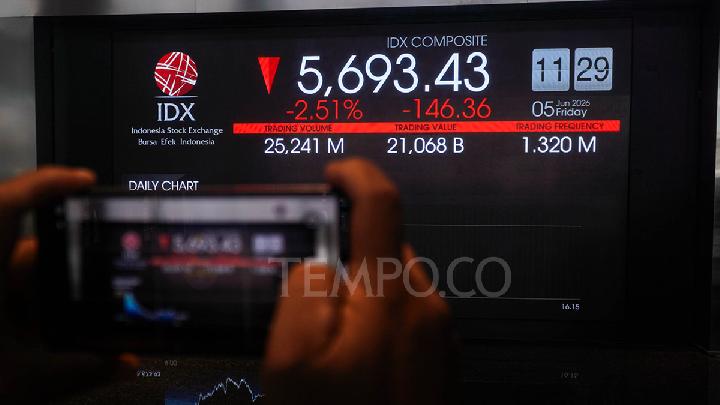
The Jakarta Composite Index (JCI) dropped 4.20 percent by the end of trading this afternoon.
Today's Top 3 News: Ivory Coast Beats France in World Cup Friendly
2 hari lalu

Here is the list of the top 3 news on Tempo English today.
How to Save Rupiah and JCI from Further Drops
2 hari lalu
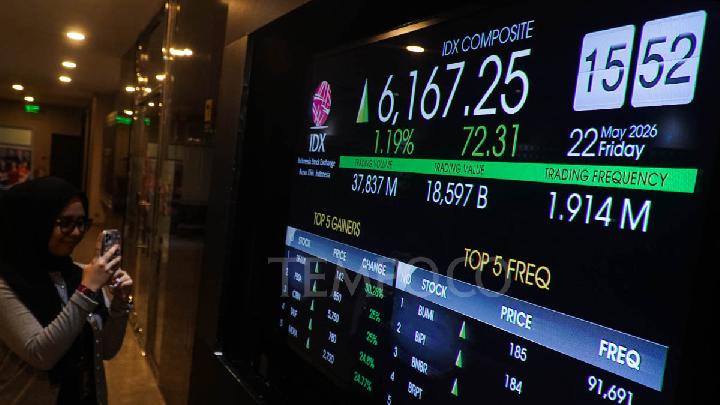
An economist shared insights on how to save rupiah and the Jakarta Composite Index (JCI/IHSG) from weakening further.
5 Measures to Stabilize the Rupiah, According to Analyst
2 hari lalu
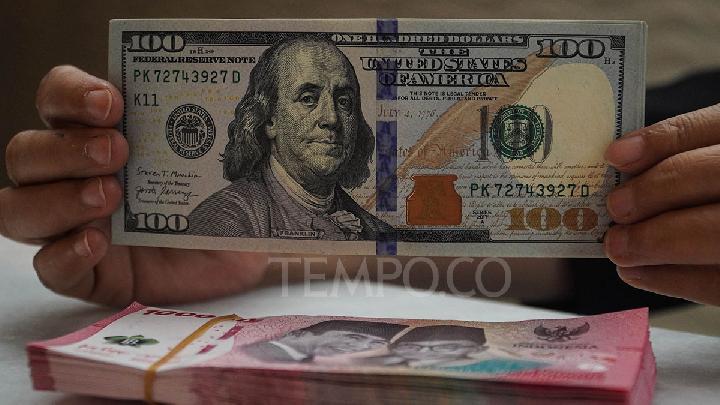
Analyst says rupiah stability requires fiscal discipline, healthy financial markets, clear external sector strategy, and stronger policy credibility.
JCI Stays Under Pressure, Falls 2.5% in Friday's First Session
2 hari lalu
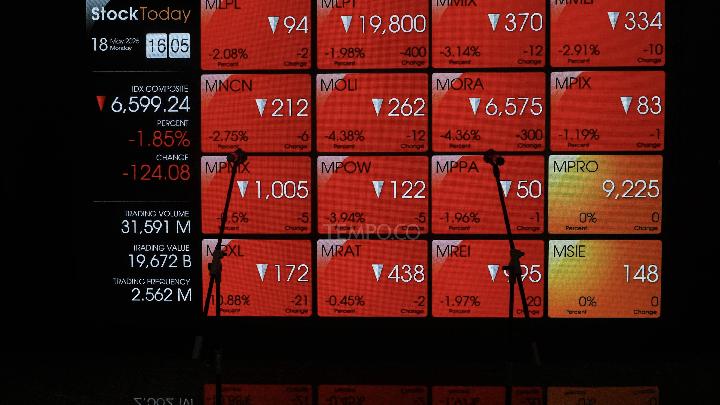
The JCI's decline underscores heightened market uncertainty, prompting investors to reduce exposure to riskier assets.