TEMPO.CO, Jakarta - Executive Director of Amnesty International Indonesia, Usman Hamid, has criticized Indonesia’s military justice system, saying it continues to serve as a political instrument that protects authorities rather than acting as an independent law enforcement body.
The criticism resurfaced following the attack on human rights activist Andrie Yunus, which has sparked calls for the alleged perpetrators to face trial in civilian courts to ensure transparency, accountability, and prevent impunity.
Historical Context
Usman traced the military justice system back to the New Order regime, which he described as a ‘military-backed’ government where the armed forces wielded extensive influence in law, politics, and the economy.
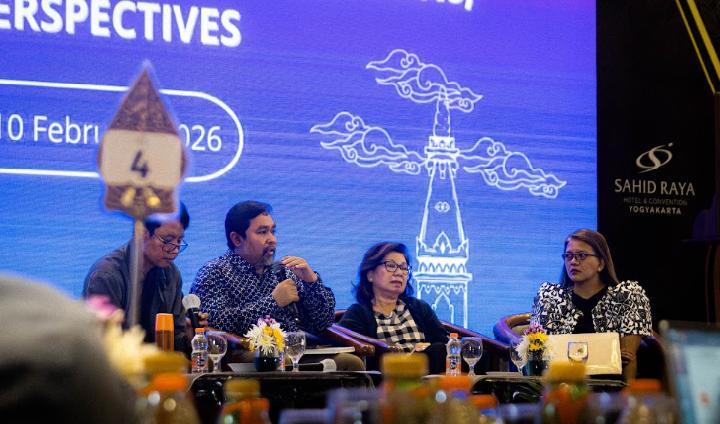
“In such a regime, the military enjoyed special privileges, including when committing legal violations,” he said during the public discussion Challenging Military Accountability on April 7, 2026.
He linked the system’s roots to the 1965 Incident, when the Army, under the Soeharto faction, consolidated power. Political opponents, especially those accused of ties to the Indonesian Communist Party (PKI), were tried in military courts.
“Military justice became a political instrument to justify and maintain the regime,” Usman added.
Trisakti Case and Activist Abductions
Reflecting on 1998, Usman shared his experience during the Trisakti tragedy and the abduction of pro-democracy activists. Both cases, he said, were handled in military courts, which failed to deliver substantive justice.
In the Trisakti case, authorities were found guilty only of procedural errors, not the criminal acts that resulted in four student deaths and injuries to dozens. “Yet, the context was open repression against the student movement,” he said.
Failing Judicial Mechanism
According to Usman, the military justice system protects superiors while targeting subordinates, often imposing only administrative or procedural sanctions in violence cases. This, he said, contradicts the constitutional principle of equality before the law.
Article 65 of the TNI Law stipulates that soldiers involved in general criminal acts must be tried in civilian courts. Yet, transitional provisions in the 1997 law preserve old military jurisdiction, hindering reforms.
Parliament and Constitutional Court Criticism
Usman criticized the 1997 Military Justice Law, still in effect despite the 2004 TNI Law and its 2025 revision. “Logically, the 2004 and 2025 regulations cannot be overridden by the 1997 law,” he said.
He added that Parliament has not finalized revisions, and the Constitutional Court has not enforced equality before the law, reflecting weak political will among civilian elites.
Violations of Judicial Principles
Usman highlighted three systemic violations:
Inequality before the law: Jurisdiction and procedures differ by rank.
Commanders Authorized to Punish (Ankum): Allows command intervention.
Case Surrendering Officers (Papera): Can block legal action against senior officers.
He noted that senior officers’ cases often go to internal forums, such as the Officer's Honor Council, instead of courts.
Independence and Accountability
Usman said military hierarchy prevents independence in the justice system and hinders accountability.
“No human rights violation cases have been truly resolved through military courts,” he said, emphasizing that military justice should be limited to internal disciplinary issues, not general criminal offenses.
Impact on Democracy
The continuation of military justice signals an incomplete democratic transition, he warned, with strong military autonomy and compromises between civilian elites and the armed forces.
“Military justice remains a political instrument to evade accountability. Criminal cases involving the military should be tried in civilian courts to be fully disclosed,” Usman said.
Government Response
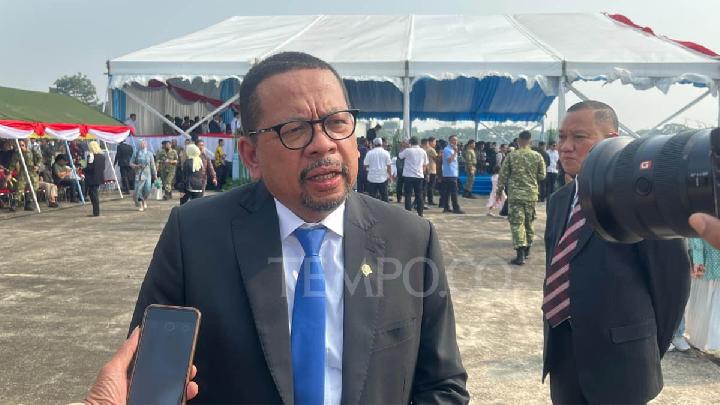
Minister of Human Rights Natalius Pigai stressed that the government cannot intervene in the legal process of the attempted murder case against Andrie Yunus, whether in civilian or military courts.
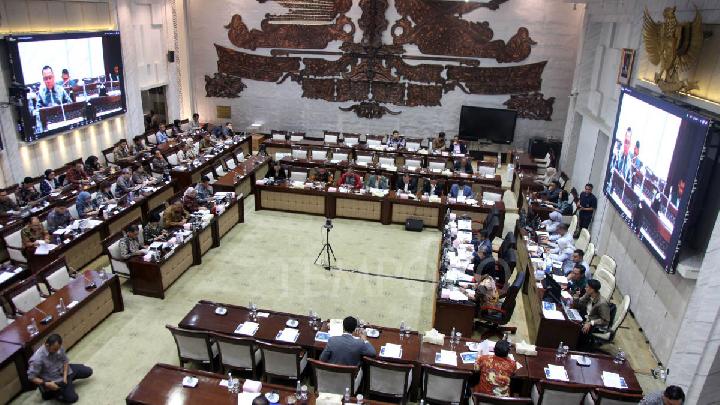
“The separation of powers requires the executive to respect legislative and judicial authority. A true state must not intervene in justice,” Pigai said during a DPR XIII Commission meeting on April 7, 2026.
Currently, the Military Police Center is handling the case, with four suspects named. Pigai cautioned that public or media pressure for civilian trials does not always benefit the judicial process.
Major General Aulia Dwi Nasrullah, Chief of TNI Information Center, confirmed that the investigation is ongoing.
Read: Andrie Yunus Rejects Military Court Process in Acid Attack Case
Click here to get the latest news updates from Tempo on Google News